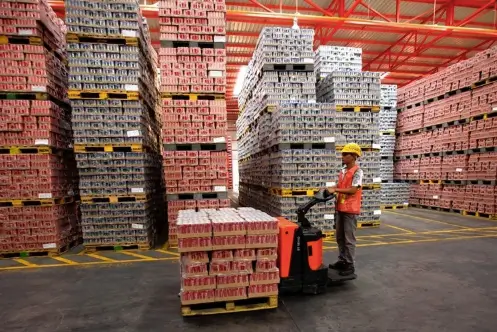
How Wholesale Beverage Buyers Plan Inventory Across Retail and Distribution Channels
Wholesale beverage purchasing involves more than selecting popular brands and placing a large order. Buyers must balance customer demand, storage capacity, delivery schedules, product variety, cash flow, and the different purchasing patterns of each sales channel.
A beverage mix that performs well in a convenience store may not perform as well in a supermarket, vending route, restaurant supply business, or regional distribution network. Successful inventory planning therefore begins with understanding where the products will be sold, how quickly they are likely to move, and how often stock can be replenished.
Inventory Planning Begins With the Sales Channel
Different retail and distribution environments require different inventory strategies.
Convenience stores and gas stations typically depend heavily on impulse purchases. Buyers serving these locations often prioritise recognisable products, popular flavors, single-serve formats, and reliable availability. Because cooler space is limited, slow-moving products can reduce the profitability of the entire beverage category.
Supermarkets usually offer a wider product range and more structured shelf layouts. Their buyers may need enough inventory to support individual cans, multipacks, promotions, and seasonal merchandising. They must also coordinate deliveries across multiple locations while maintaining consistent availability.
Vending operators have a different challenge. Every slot inside a vending machine must justify its space. Product selection is usually based on route-level sales data, location type, machine capacity, and refill frequency. A drink that sells quickly in a gym may perform differently in an office, university, hospital, or transportation center.
Beverage distributors must consider all these channels at the same time. They need enough variety to meet customer demand without holding excessive quantities of products that may move slowly.
Use Sales Data Instead of Assumptions
Historical order and sales data should guide purchasing decisions wherever possible.
Buyers can review:
- units sold by product and flavor;
- average weekly or monthly movement;
- sales differences by location;
- seasonal changes in demand;
- promotional performance;
- stockout frequency;
- inventory remaining at the end of each ordering cycle.
This information helps distinguish dependable products from temporary trends.
New products still require testing, but a controlled trial is safer than committing immediately to a large volume. A buyer might introduce a new beverage across a limited number of locations, monitor the results, and increase the order only after demand has been demonstrated.
Separate Core Inventory From Test Inventory
A practical beverage assortment normally contains two different groups.
Core inventory includes products with steady, repeatable demand. These items should receive most of the available purchasing budget and storage space because they provide predictable turnover.
Test inventory includes new flavors, seasonal editions, emerging brands, and products intended for a specific audience. These items may offer growth opportunities, but they should initially represent a smaller percentage of the total order.
Separating these categories prevents trend-driven purchasing from weakening the availability of proven products.
Calculate Reorder Points Carefully
A reorder point determines when the next purchase should be placed.
It should consider:
- average product movement;
- supplier preparation time;
- transportation time;
- warehouse receiving time;
- safety stock;
- expected promotions or seasonal demand.
Waiting until inventory is almost exhausted creates unnecessary risk. A transportation delay, sudden increase in sales, or temporary shortage can leave buyers without enough stock to serve customers.
However, ordering too early can create excess inventory, reduce available cash, and consume warehouse capacity.
The strongest purchasing systems establish reorder points for individual products or product groups rather than treating every beverage in the same way.
See also: How to Incorporate a Business in Ontario
Match Order Size to Storage and Cash Flow
Larger orders may offer better commercial terms, but they are not automatically the best choice.
Before ordering pallet or truckload quantities, buyers should evaluate:
- available warehouse space;
- unloading and handling capacity;
- expected sales velocity;
- working capital;
- product shelf life;
- customer commitments;
- the cost of holding slow-moving stock.
A full truckload can be efficient for a distributor with established demand across multiple customers. The same order could create serious cash-flow and storage problems for a smaller retailer.
Order volume should therefore be based on realistic movement rather than the lowest possible unit price.
Use Mixed Pallets Strategically
Mixed pallets can help buyers expand product variety without purchasing a full pallet of every item. They are especially useful for convenience stores, independent retailers, vending operators, and buyers testing new products.
A mixed pallet might combine:
- core products with dependable demand;
- sugar-free or zero-sugar options;
- popular flavors;
- limited quantities of newer products;
- products intended for different customer groups.
However, mixed pallets should still be planned using sales expectations. Adding too many low-volume items can make receiving, storage, and inventory management more complicated.
The purpose of a mixed pallet is to improve assortment efficiency, not simply to maximize the number of products ordered.
Plan for Seasonal and Promotional Demand
Beverage demand often changes during the year.
Warm weather may increase demand for cold single-serve drinks, while sporting events, festivals, holiday travel, school schedules, and promotional campaigns can affect specific channels.
Wholesale buyers should coordinate inventory with:
- retailer promotion calendars;
- planned price reductions;
- local events;
- seasonal traffic;
- new store openings;
- vending-machine installations;
- customer acquisition campaigns.
Promotional inventory should be ordered early enough to arrive before the campaign begins. Buyers should also estimate what will happen after the promotion ends to avoid being left with excessive stock.
Monitor Inventory at the SKU Level
Total case volume does not provide enough detail for effective planning.
Two buyers may each hold 1,000 cases of beverages, but one may have a balanced assortment while the other has too much inventory concentrated in products with weak demand.
SKU-level monitoring helps buyers identify:
- products approaching stockout;
- flavours moving more slowly than expected;
- excess inventory;
- products that should be reordered;
- products that should be reduced or discontinued.
This information becomes increasingly important when managing multiple brands, formats, flavours, and customer groups.
Coordinate Closely With the Supplier
Reliable inventory planning depends on accurate communication between buyer and supplier.
Before confirming an order, buyers should provide:
- required products and flavours;
- case or pallet quantities;
- delivery location;
- requested delivery period;
- whether mixed pallets are needed;
- whether the order is a trial or recurring requirement;
- any receiving restrictions.
The supplier should confirm availability, packaging structure, order quantities, payment terms, and delivery conditions before the buyer commits.
Working with an experienced provider of wholesale beverage supply can help commercial buyers coordinate product selection, pallet planning, and larger-volume purchasing around their actual sales channels.
The anchor should support the article rather than interrupt it. It belongs naturally within the discussion of supplier coordination, where readers would reasonably expect access to additional commercial supply information.
Build a Repeatable Purchasing Process
Strong beverage purchasing is systematic.
A repeatable process might include:
- Reviewing sales and stock levels.
- Identifying products that have reached their reorder points.
- Separating core replenishment from test purchases.
- Confirming available warehouse and cash-flow capacity.
- Preparing the required product and quantity list.
- Requesting current availability and commercial terms.
- Reviewing the quotation and delivery schedule.
- Monitoring product performance after receiving the order.
This approach reduces emotional purchasing and makes it easier to compare results across different ordering cycles.
Final Thoughts
Wholesale beverage inventory planning requires buyers to connect purchasing decisions with real sales behavior.
The best inventory plan is not necessarily the one with the largest order or the widest product range. It is the one that maintains reliable availability, protects cash flow, uses storage efficiently, and provides the right products for each retail or distribution channel.
Buyers who monitor demand, establish realistic reorder points, test new products carefully, and communicate clearly with suppliers are better positioned to reduce stockouts and avoid costly overstock.
As beverage categories continue to evolve, disciplined inventory planning will remain one of the most important capabilities for retailers, vending operators, wholesalers, and distribution businesses.