Tenniix Pickle Basic vs Traditional Practice: Which Wins?
For most players, “practice” has traditionally meant one thing: finding a partner and hitting balls back and forth until you run out of time or energy. It’s how the sport has been learned for decades, and it works — up to a point. But as more players look to improve faster and more consistently, a fair question keeps coming up: does a dedicated training machine actually offer more value than traditional partner-based practice, or is it just a convenient add-on? This comparison breaks down where each approach genuinely wins.
What Traditional Practice Does Well
There’s a reason partner-based practice has remained the default for so long. Playing against another person offers unpredictability that no machine fully replicates — different pace, unexpected placement, and the psychological pressure of playing a live point. It also builds match-specific skills like reading an opponent’s body language and adjusting strategy in real time, which are difficult to train in isolation.
Social engagement is another real advantage. For many players, the enjoyment of pickleball comes as much from the social side of the game as the physical activity itself, and that’s simply not something equipment can replace.
Where Traditional Practice Falls Short
The limitations of partner-based practice are just as real, even if they’re less often discussed. Finding a partner at a compatible skill level consistently is difficult, especially for players trying to isolate specific weaknesses rather than just play casual games. A partner who’s a beginner can’t provide the repetition an intermediate player needs to refine a specific shot, and a highly skilled partner may not want to spend an entire session feeding the same setup repeatedly.
Scheduling is the other persistent problem. Consistent improvement generally requires regular, structured practice — and that’s exactly what’s hardest to arrange when it depends on two people’s availability lining up repeatedly.
See also: What to Recheck When Kaiser Wegovy Coverage Changes During the Year
What Machine-Based Practice Adds
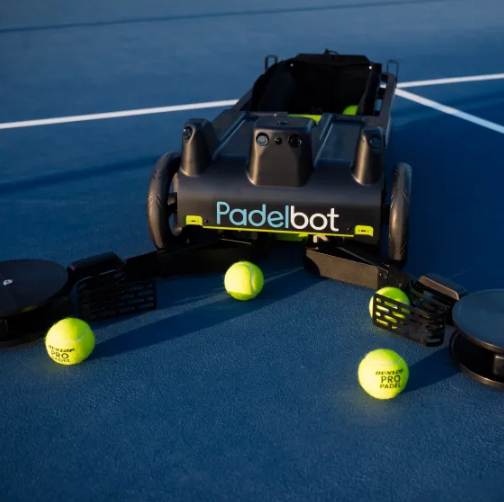
This is where a dedicated machine changes the equation. A structured approach to pickleball practice offers something traditional practice structurally can’t: complete control over repetition, shot type, and session focus, without depending on anyone else’s schedule or willingness to run a specific drill.
Rather than replacing partner-based play, this kind of practice works alongside it, filling in the gaps that live play doesn’t address well — isolated repetition of a specific shot, building consistency on a particular movement pattern, or simply getting reps in whenever time is available rather than whenever a partner happens to be free.
Comparing the Two Directly
Skill isolation. A machine wins clearly here. Practicing a specific weakness — say, cross-court dinks or third-shot drops — repeatedly and consistently is far easier without needing a partner to keep feeding the same setup.
Scheduling flexibility. Machines win decisively. Practice can happen whenever a player has court time, regardless of anyone else’s availability.
Match realism and unpredictability. Traditional practice wins here. No machine fully replicates the psychological and tactical elements of playing against a live, thinking opponent.
Social engagement. Traditional practice wins by default, since this is inherently a human element that equipment doesn’t address.
Consistency of repetition. Machines win. They don’t get tired, distracted, or inconsistent with feed quality over the course of a long session.
The Practical Answer: It’s Not Actually Either/Or
Framing this as a competition slightly misses the point. The players who improve fastest typically use both approaches for what each does best — structured, focused machine practice to build and refine specific skills, combined with regular live play to develop tactical awareness, adaptability, and match experience.
A useful way to think about it: machine practice builds the tools, and live play teaches players when and how to use them. Neither fully substitutes for the other.
Getting the Most Out of Machine-Based Sessions
For players investing in a training machine, understanding its full capabilities matters more than it might seem. Reviewing product troubleshooting resources and setup guidance early on helps avoid common early frustrations — connectivity issues, feed inconsistencies, or underused features — that can otherwise make machine practice feel more complicated than it needs to be. Getting comfortable with the equipment quickly means more time actually practicing and less time troubleshooting.
Who Should Lean More Heavily on Each Approach
Players early in their development, or those working through a specific technical issue, tend to benefit more from dedicated machine repetition in the short term. Players with solid fundamentals looking to sharpen tactical decision-making and match awareness get more out of prioritizing live play, using machine sessions as a supplement rather than the primary training method.
Final Verdict
Neither approach “wins” outright — they solve different problems. Traditional practice builds match awareness and social engagement that no machine can replicate, while structured machine practice solves the scheduling and repetition problems that have always limited how consistently players can train specific skills. The most effective training routines combine both rather than treating it as a choice between the two.
FAQs
1. Should I choose a machine or a practice partner? Ideally both. A machine solves consistency and scheduling problems, while a partner provides match realism and social engagement that a machine can’t replicate.
2. Is machine practice less valuable than playing real matches? It serves a different purpose. Machines are best for isolating and repeating specific skills, while match play develops tactical decision-making and adaptability.
3. Can a machine help me improve faster than partner practice alone? For isolating specific weaknesses and getting consistent repetition, yes. Combined with regular match play, it often accelerates overall improvement.
4. What should I do if I run into issues setting up my machine? Reviewing the product’s troubleshooting and setup documentation early on resolves most common early issues quickly, minimizing disruption to your practice routine.
5. Is traditional practice still necessary if I have a training machine? Yes. Live play develops skills like reading an opponent and adapting strategy in real time, which structured machine practice isn’t designed to replicate.