Controlling Coating Behavior From Mixing to Final Application
Coating manufacturers need formulations that remain predictable throughout their entire lifecycle. From the moment ingredients are combined to the point where the finished coating is applied to wood, numerous variables can influence performance.
One of the most important is flow behavior. A coating must be stable in storage, manageable during processing, and easy to apply while still producing a consistent film.
This makes rheological design a key part of modern water-based coating development.
Read Also: Microsoft Dynamics Solutions for Modern Business Transformation
What Is Coating Rheology?
Rheology describes how materials flow and deform under applied forces.
For a coating, this can influence mixing, pumping, spraying, brushing, rolling, leveling, and sag resistance.
Unlike simple viscosity, rheology considers how flow behavior can change under different conditions.
A coating may behave one way while resting in a container and another way when subjected to the high shear forces associated with spraying or mechanical mixing.
Understanding these differences helps formulators create products suited to their intended application.
Rheology and Manufacturing Efficiency
Coating production involves several stages where flow behavior matters.
During mixing, viscosity affects energy requirements and the ability of equipment to distribute ingredients evenly. During pumping, it influences transport through pipes and processing equipment.
If the formulation behaves unpredictably, production efficiency can suffer.
Consistent rheological properties therefore support both product quality and manufacturing reliability.
Fine Mineral Additives
Fine mineral materials can be incorporated into coating formulations to modify selected properties.
Silica is one material that can be evaluated for its influence on flow behavior, dispersion, and formulation stability.
Because fine particles have significant surface area, they can interact strongly with surrounding components.
However, the effect depends on particle characteristics, surface properties, loading level, and dispersion.
Hydrophilic Surface Characteristics
When working with water-based systems, the interaction between an additive and water is particularly important.
Hydrophilic surfaces can interact readily with water, while other surface treatments may produce different behavior.
This affects wetting and dispersion and can influence the final rheological profile.
Formulators should therefore consider surface chemistry rather than looking only at chemical composition.
Balancing Application Properties
A good coating should provide suitable behavior during application without compromising the final film.
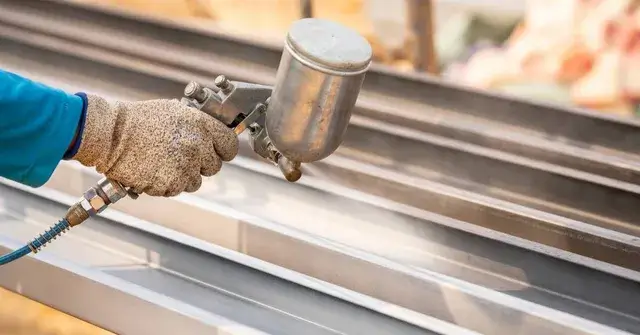
For example, spray application requires appropriate atomization characteristics. Brush application may require good leveling, while roller application may require a different balance of viscosity and flow.
The desired rheological profile should therefore be defined according to the application method.
Preventing Settling
Fine particles need to remain appropriately distributed during storage.
If heavier components settle rapidly, the coating may become inconsistent from the top to the bottom of the container.
A formulation with suitable stability can reduce the risk of this problem.
Storage tests at different temperatures can help manufacturers understand how the system behaves over time.
The Role of Mixing
Mixing is one of the most important steps in achieving consistent dispersion.
The correct mixing equipment and sequence depend on the formulation. Adding a fine powder too quickly can create localized agglomeration, while insufficient shear may prevent complete dispersion.
Manufacturers should therefore establish controlled addition and mixing procedures.
Pilot-scale testing can help confirm whether laboratory methods translate effectively to production.
Application to Wood
Once the coating reaches the application stage, substrate properties become important.
Wood can vary in porosity, surface texture, moisture content, and composition. These characteristics influence wetting and absorption.
A coating that performs well on one substrate may require adjustment for another.
Testing representative wood materials can therefore improve confidence in the final formulation.
Monitoring Finished Coating Quality
Quality control should extend beyond the manufacturing process.
Finished samples can be evaluated for viscosity, appearance, drying, adhesion, gloss, hardness, and other application-specific characteristics.
Comparing current batches with established reference standards helps identify deviations.
This is particularly valuable when coatings are manufactured in large volumes.
Technical information concerning waterborne coating rheology can provide further context for understanding the relationship between fine silica materials and the flow behavior of water-based coating systems.
Developing a Repeatable Process
A reliable coating process should be documented in detail.
Important parameters can include:
- Ingredient specifications
- Addition sequence
- Mixing speed
- Mixing time
- Temperature
- Viscosity range
- Storage conditions
- Application method
- Drying conditions
Keeping these parameters consistent makes production easier to control and simplifies troubleshooting.
Frequently Asked Questions
1. Why does rheology matter in coating production?
It influences how the material behaves during mixing, pumping, storage, and application. Appropriate flow behavior can help improve consistency and processing efficiency.
2. How can fine silica influence a water-based coating?
Depending on its characteristics and concentration, fine silica can modify rheology, dispersion, and stability. The effect needs to be determined through formulation testing.
3. Does the same coating behave identically on every type of wood?
Not necessarily. Wood species, moisture, porosity, and surface preparation can all influence coating application and final appearance.
Conclusion
Consistent coating performance depends on controlling the complete formulation and production process. Rheological behavior is especially important because it affects everything from mixing and storage to final application.
By selecting compatible materials, controlling particle dispersion, testing representative substrates, and establishing repeatable manufacturing procedures, coating producers can develop more predictable water-based systems for modern wood-finishing applications.