Fishing Boat Shade: How to Stay Protected From the Sun Without Compromising Fishing Space
Spending hours on the water is an essential part of fishing, but continuous exposure to direct sunlight can make the experience uncomfortable. Open fishing boats often have limited natural shade, leaving anglers exposed to intense UV rays and rising temperatures throughout the day. Without suitable protection, excessive sunlight can affect onboard comfort, increase heat exposure, and make extended fishing trips more demanding.
Choosing the right fishing boat shade can help create a more comfortable fishing environment without sacrificing valuable deck space. However, not every shade system is suitable for every vessel. Fishing boats require practical designs that provide overhead protection while maintaining casting clearance, rod accessibility, and freedom of movement.
From traditional bimini tops to removable rod holder-mounted shade poles, several options are available. Understanding their features, materials, and installation requirements can help you select a system that complements your boat and fishing activities.
Why Sun Protection Matters During Long Fishing Trips
Fishing often involves spending extended periods outdoors with limited opportunities to escape direct sunlight. Water can also reflect sunlight, increasing overall exposure while anglers remain on open decks.
Prolonged ultraviolet exposure can contribute to sunburn and long-term skin damage. High temperatures may also cause discomfort, dehydration, and fatigue, making appropriate sun protection an important consideration during boating activities.
A suitable shade system helps reduce direct sunlight over selected areas of the vessel. It can provide a more comfortable environment for anglers while protecting seating surfaces and selected onboard equipment from continuous exposure.
However, fishing requires more than basic overhead coverage. The shade must accommodate different fishing positions, allow easy access to rods, and avoid interfering with casting movements. This makes flexibility and thoughtful positioning essential when selecting marine shade equipment.
What Makes a Good Fishing Boat Shade System?
A good fishing boat shade should balance sun protection, accessibility, and structural performance. Its design must complement the vessel’s layout instead of restricting important fishing activities.
Maintaining Clear Casting and Fishing Areas
Casting clearance is one of the most important considerations for fishing boats. An incorrectly positioned canopy can interfere with rod movement, overhead casting, and fishing lines.
Look for a configuration that provides shade over seating or resting areas while leaving sufficient room for fishing activities. Pole positioning and canopy dimensions should be considered before installation.
See also: Are Long Sleeve Golf Polos Worth It? A Guide to Comfort, Coverage, and Performance
Providing Shade Without Restricting Deck Movement
Fishing boats need accessible decks for handling equipment, moving between fishing positions, and reaching storage compartments. Large permanent structures may reduce available overhead and walking clearance.
Removable systems offer greater flexibility because their components can be repositioned or taken down when additional space is required.
Choosing Materials Designed for Marine Conditions
Marine shade equipment must withstand sunlight, salt spray, moisture, and changing weather conditions. Materials intended for ordinary outdoor use may not provide sufficient durability.
Consider UV-resistant marine fabric, corrosion-resistant fittings, and strong supporting poles. High-quality components can improve reliability and reduce maintenance requirements over time.
Popular Fishing Boat Shade Options Compared
Fishing boat shade systems are available in several configurations, each offering different advantages. Comparing their installation methods, coverage, and storage requirements can help narrow down the options.
Traditional Bimini Tops for Fishing Boats
Bimini tops feature a fabric canopy supported by a folding or fixed frame. They are commonly installed over cockpit and seating areas to provide consistent overhead shade.
Their main advantage is relatively extensive coverage. However, the permanent mounting hardware and frame can occupy space when fishing activities require additional clearance.
Portable Canopies and Boat Umbrellas
Portable canopies and marine umbrellas offer flexible shade for smaller areas. They can be repositioned according to sunlight direction and removed when not needed.
Their effectiveness depends on mounting security and construction quality. Lightweight designs may be less appropriate for exposed conditions, particularly when wind places pressure on the canopy.
Rod Holder-Mounted Fishing Boat Shade Poles
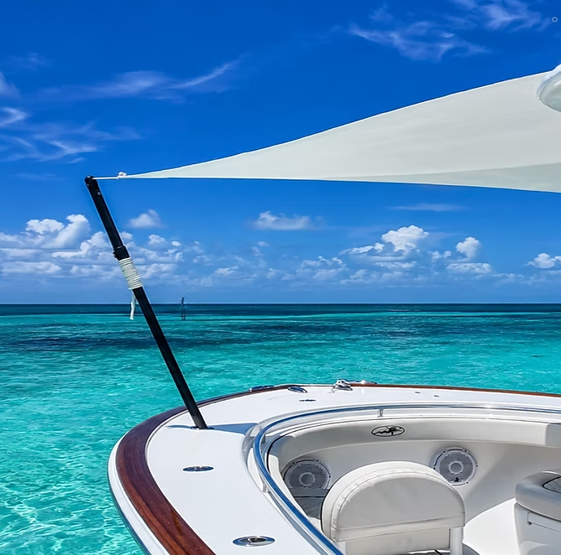
Rod holder-mounted systems use existing fishing rod holders to support overhead shade fabric. This approach is particularly useful for fishing boats because it can provide additional coverage without requiring permanent deck modifications.
These systems generally use lightweight support poles, marine-grade fittings, and tensioning arrangements to secure the fabric.
Carbon fibre and aluminium are popular pole materials, offering different combinations of weight, strength, and cost.
Custom Marine Shade Structures
Custom marine shade structures are designed around a vessel’s specific dimensions and layout. They can provide coverage for larger decks, specialised seating arrangements, and particular onboard requirements.
However, custom systems may involve additional design considerations, installation work, and costs compared with portable alternatives.
Why Rod Holder Shade Poles Are a Practical Option for Fishing Boats
Rod holder-mounted shade poles offer an attractive solution for anglers who want additional sun protection without permanently changing their boat’s layout.
Using Existing Rod Holders for Shade Installation
One of the main advantages of these systems is their ability to use existing rod holders as mounting points. Instead of installing additional deck hardware, compatible poles fit into the rod holders already available on the vessel.
For example, 1.5-inch diameter poles are designed to fit most standard rod holders. However, measuring the actual mounting dimensions is essential before purchasing.
Creating Overhead Shade Without Permanent Modifications
Removable shade poles can provide overhead protection without requiring conventional permanent support structures.
A compatible system can be installed when shade is required and removed when an open deck configuration is preferred. This flexibility is particularly useful for boats where fishing activities frequently change the required deck arrangement.
Maintaining Fishing Access and Deck Clearance
Proper pole placement allows anglers to maintain access to important fishing areas. The shade can be positioned over selected sections while keeping rod holders and casting spaces accessible.
The choice of pole length and mounting location plays an important role in achieving the right balance between coverage and clearance.
Removing and Storing Shade Poles Between Trips
Removable poles are convenient to dismantle and store when not in use. Lightweight materials can make handling easier, while protective storage bags help prevent unnecessary damage during transportation.
This arrangement also allows the boat to maintain a cleaner, more open appearance when shade is not required.
Choosing the Right Fishing Boat Shade Based on Your Vessel
Boat dimensions, rod holder locations, fishing activities, and desired coverage all influence the most suitable shade configuration.
Shade Requirements for Small Fishing Boats
Smaller fishing boats generally have limited deck space, making compact shade solutions particularly useful.
A lightweight removable system can provide coverage over selected areas without occupying excessive space. Before purchasing, consider the boat’s available mounting points and the amount of overhead clearance required.
Sun Protection for Center Console Fishing Boats
Centre console boats often feature open layouts with exposed forward and aft decks. Their existing rod holders can provide convenient mounting locations for removable shade poles.
A carefully positioned shade panel can cover seating or resting areas while maintaining access to the central console and surrounding fishing spaces.
Shade Configurations for Offshore Sportfishing Boats
Offshore sportfishing boats may require larger coverage areas and stronger supporting components. Their shade systems should accommodate fishing equipment, overhead clearance, and the demands of marine environments.
Longer pole configurations can be considered where the vessel’s dimensions and mounting positions support them.
Larger Shade Solutions for Sportfish Yachts
Sportfish yachts often feature larger cockpit areas, flybridges, and additional open spaces that may require specialised shade arrangements.
Extended pole configurations and topping lift poles can help create suitable overhead coverage. Topping lift poles raise the centre of the shade fabric, which can improve clearance and help water drain from the canopy. Explore the marine shade solutions available from Sunfly Poles to find a configuration suited to your vessel.
Carbon Fiber vs Aluminium Fishing Boat Shade Poles
The material used in shade pole construction influences handling, durability, and overall performance. Carbon fibre and aluminium are two common choices for marine applications.
Comparing Weight and Structural Performance
Carbon fibre offers an excellent strength-to-weight ratio, making it a lightweight and rigid option for marine shade poles. Its lower weight can make installation, removal, and storage more convenient.
Aluminium is another practical material that offers dependable structural performance. However, it is generally heavier than carbon fibre.
For anglers who prioritise lightweight equipment and convenient handling, carbon fibre can be an appealing choice.
Understanding Marine Corrosion Resistance
Saltwater exposure can gradually affect metal components, particularly when protective coatings are damaged or maintenance is neglected.
Carbon fibre does not rust like conventional metals, although its connecting hardware still needs corrosion-resistant construction. Aluminium poles should have appropriate protective finishes, while stainless steel fittings can provide additional protection.
Marine-grade 316 stainless steel is commonly preferred for fittings exposed to saltwater environments.
Why Material Selection Matters for Offshore Fishing
Offshore conditions can place additional demands on shade structures because of changing winds, moisture, and prolonged exposure.
A lightweight yet rigid pole can make handling easier, but the entire system must be evaluated, including its mounting points, fittings, fabric, and tensioning hardware.
Material selection should always be considered alongside manufacturer specifications and recommended operating conditions.
Important Factors to Consider Before Installing a Fishing Boat Shade
Selecting the right shade equipment requires careful attention to installation details. A suitable system should match the boat’s dimensions and provide adequate coverage without interfering with fishing activities.
Pole Length and Rod Holder Placement
Measure the distance between mounting points and consider the desired height of the canopy. Pole length should provide suitable overhead coverage without obstructing fishing rods or passenger movement.
The position and angle of existing rod holders will also influence the final configuration.
Fabric Coverage and Tensioning Requirements
Choose fabric dimensions that provide sufficient shade for the intended area. Marine-grade fabric should offer UV resistance and suitable durability.
A reliable tensioning arrangement helps keep the fabric properly positioned. Avoid excessive tension that could place unnecessary pressure on the poles and fittings.
Wind Conditions and Safe Shade Operation
Wind creates additional force on shade fabric and supporting structures. Always check the manufacturer’s recommended operating conditions and limitations.
Removable shade equipment should be taken down when conditions exceed its specified limits. Never assume that a shade system is suitable for every offshore weather condition.
Ease of Installation and Removal
Consider how quickly the system can be installed and removed. Straightforward mounting arrangements, accessible tensioning hardware, and manageable pole weight can make regular use more convenient.
Also, check whether the equipment includes suitable storage accessories.
Fishing Boat Shade Maintenance Tips for Long-Term Performance
Regular maintenance helps preserve the appearance and functionality of marine shade equipment. Salt, moisture, and environmental exposure can gradually affect both fabric and hardware.
Cleaning Marine Shade Fabric
Rinse the fabric with freshwater to remove salt deposits and loose dirt. Use mild soap and a soft brush when necessary, following the manufacturer’s cleaning instructions.
Allow the fabric to dry properly before folding or storing it to minimise moisture-related damage.
Inspecting Pole Fittings and Mounting Hardware
Periodically inspect mounting inserts, pulleys, cam cleats, fasteners, and connecting components.
Look for signs of corrosion, looseness, wear, or damage. Replace compromised components according to the manufacturer’s recommendations rather than continuing to use potentially unreliable hardware.
Proper Storage After Fishing Trips
Remove the shade equipment when it is not required, especially before adverse weather conditions.
Clean and dry the components before placing them in a protective storage bag. Store poles in a secure location where they will not experience unnecessary impact or pressure.
Frequently Asked Questions
1. What is the best shade option for an offshore fishing boat?
The best option depends on the vessel’s dimensions, mounting points, and intended fishing activities. Marine-grade removable rod holder shade poles can provide flexible coverage, while larger vessels may benefit from extended configurations. Always consider wind limitations and structural specifications.
2. Can a fishing boat shade interfere with casting?
It can if the poles or canopy are positioned incorrectly. Select a configuration that provides overhead protection while maintaining sufficient clearance for rods, fishing lines, and casting movements. Proper mounting placement is essential.
3. Are carbon fiber shade poles suitable for saltwater environments?
Yes. Carbon fibre does not rust like conventional metal materials, making it a suitable option for marine applications. However, connecting hardware and fittings must also be corrosion-resistant, and regular freshwater cleaning is recommended.
4. How do rod holder-mounted shade poles work?
These systems use compatible existing rod holders as mounting points. The poles support the shade fabric, which is secured using an appropriate tensioning arrangement. This allows overhead shade to be installed without conventional permanent deck modifications.
5. Can I install a fishing boat shade without drilling?
Yes. Certain removable rod holder-mounted systems are designed to fit existing rod holders, eliminating the need for additional drilled mounting points. Compatibility depends on the dimensions and condition of the boat’s existing hardware.
Conclusion: Choose a Fishing Boat Shade That Works With Your Fishing Style
The right fishing boat shade should improve onboard comfort without limiting the activities that make fishing enjoyable. Adequate coverage, casting clearance, accessible deck space, and marine-grade construction are all important considerations when comparing available systems.
Removable rod holder-mounted shade poles offer a practical combination of flexibility and convenience. With options in carbon fibre and aluminium, boat owners can select equipment that suits their handling preferences, vessel dimensions, and coverage requirements.
Before making a purchase, evaluate mounting compatibility, pole length, fabric quality, and wind limitations. Investing in a well-designed shade system can help make extended fishing trips more comfortable while keeping your boat functional.
Visit the About Us page to learn more about the company and enquire about suitable shade pole options for your fishing boat.