Waterproofing Services Singapore: How to Choose a Contractor Who Fixes the Leak for Good
A damp patch on the ceiling is rarely the real problem. The water entered somewhere else, travelled along a slab or pipe, and showed up where it was easiest to see. That is why so many Singapore homeowners repair the same leak twice: the first contractor treated the stain, not the source. Hiring from the many waterproofing services Singapore offers is easier when you know what a thorough job looks like and which warning signs point to a rushed one.
Why Leaks Come Back
Most repeat leaks come from one of three mistakes. The first is misdiagnosis, where the contractor assumes the cause without testing. The second is surface-only treatment, such as applying a coating over cracked tiles or a failed screed without addressing what lies underneath. The third is poor preparation. Waterproofing membranes bond to clean, dry, sound surfaces. Apply one over dust, moisture or loose material, and it peels within a year or two.
A contractor who understands these failure points will spend time on diagnosis and preparation, which are the least visible parts of the job and the most important.
Where Singapore Homes Usually Leak
Knowing the common trouble spots helps you judge whether a contractor’s explanation makes sense.
Bathrooms. Floor traps, pipe penetrations, wall-floor junctions and aged grout let water seep into the slab and into the unit below. Neighbors often notice before you do.
Balconies and planter boxes. Constant sun and rain wear down the original membrane. Cracks along the edges and drainage points are typical.
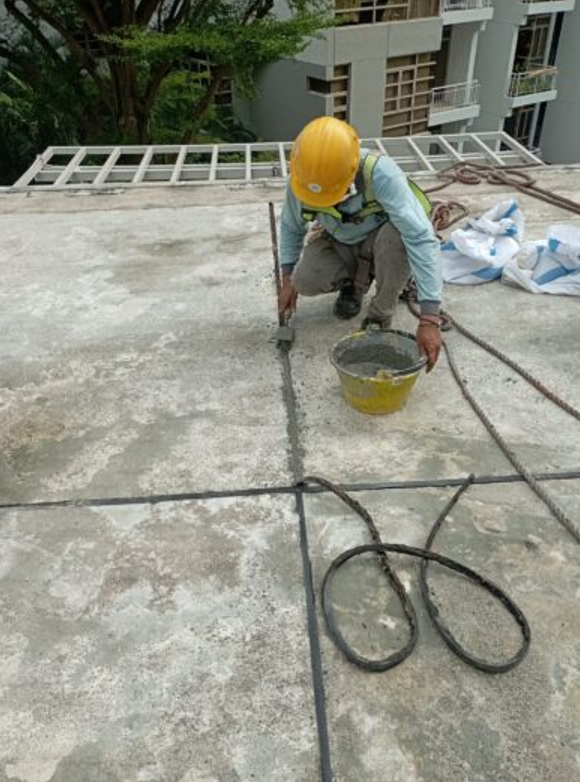
Roofs and flat roof terraces. Ponding water, cracked screed and failed expansion joints are the usual causes. Roof leaks can travel far from the entry point.
External walls. Hairline cracks and degraded sealant around windows allow rain in during heavy downpours.
Basements and car parks. Groundwater pressure and construction joints cause seepage that needs specialized systems.
The Diagnosis Comes First
A competent contractor begins with an inspection, not a quotation. Expect them to ask when the leak appears (after rain, after showering, constantly), check moisture levels with a meter, and look at the likely entry points. For bathroom leaks, a ponding test is common. The floor is blocked and flooded with a shallow layer of water for a set period to see whether the leak reproduces. Other cases may call for thermal imaging or a water spray test on the external wall.
Be wary of anyone who quotes over the phone, or who names a cause and a price within minutes without looking at the area. Leaks are cause-and-effect puzzles, and guessing wastes your money.
Methods and Materials
Different problems need different systems. A contractor should be able to explain why they have chosen one for your situation.
- Cementitious coatings suit areas that stay in contact with moisture, such as bathrooms, and are rigid.
- Liquid-applied polyurethane and acrylic membranes are flexible and common for roofs and balconies.
- Sheet membranes work on larger flat roofs and suit proper detailing at edges.
- Crystalline systems are used for concrete structures such as basements and water tanks.
- Injection grouting seals active cracks and joints that are leaking under pressure.
- Sealants handle movement joints and window perimeters.
Ask which product they plan to use, its brand and the number of coats. Check that it is suited to the surface and exposure. A bathroom product spread on an exposed roof will fail early.
Preparation Is Where Jobs Succeed or Fail
Ask the contractor to describe their preparation steps. A sound process usually includes removing old tiles or failed coatings where needed, repairing cracks and uneven screed, cleaning the surface, priming, and allowing proper curing time between coats. Corners, pipe penetrations and drains get extra reinforcement, since these are where most failures begin.
Rushing the curing period is a common shortcut. Coatings applied over damp surfaces or tiled too early do not bond properly. A contractor who is honest about drying times, even when it extends the schedule, is protecting the result.
Test Before You Tile
For bathrooms and balconies, a flood test after waterproofing is standard practice. The area is filled with water and left for 24 to 48 hours while the contractor and you check for drops in water level and signs of leakage below. Only after it passes should tiling begin. Insist on this step, and ask for photos or a written note of the result.
Skipping the test saves a day and risks the entire floor, because discovering a failure after tiling means tearing everything out again.
Credentials, Insurance and Warranty
Check that the company is registered and has a history. Ask whether its workers are trained in the products they apply, since many membrane manufacturers certify installers. Confirm that the firm carries work injury compensation and public liability insurance. If a worker is hurt on your premises or damages a neighbor’s unit, you do not want to be exposed.
Warranty terms deserve close reading. Look for the length of coverage, what it covers (workmanship, materials or both), and what voids it. A five-year warranty means little if the company disappears in two. Get the warranty in writing and keep it.
Look at Past Work
Photos from past jobs show how the contractor handles detail. Look for clean edges, tidy drain treatment and evidence of before-and-after conditions. Ask for references, and if possible speak to a past customer with a similar problem. Reviewing a portfolio such as the completed projects of a local firm shows the kinds of leaks, building types and solutions a contractor has dealt with.
Online reviews help, but read them carefully. Look for comments that describe whether the leak stayed fixed months later, not just whether the crew was polite.
Understanding Quotes and Costs
Collect at least two or three quotations and compare them line by line. A good quote lists the areas covered, the materials, the number of coats, the preparation steps, the testing, the warranty and the schedule. Vague one-line quotes make comparison impossible and leave room for disputes.
Price differences usually reflect scope. A low quote may leave out hacking and reinstating tiles, or use a thin single coat. Ask what happens if hidden damage turns up once work begins, and how any additional charges will be approved. Avoid paying a large sum upfront. A modest deposit, with progress payments tied to completed stages, keeps incentives aligned.
Red Flags to Walk Away From
- A quote with no inspection
- Promises of a permanent fix with no warranty in writing
- Pressure to sign on the spot or a “today only” discount
- Refusal to explain materials or methods
- No flood test planned
- No company address, registration or insurance details
- Cash-only demands with no receipt
Managing the Job Yourself
Once work begins, stay involved. Ask for photos at each stage: prepared surface, primer, each coat, and the flood test. Check that the schedule allows for curing. Keep communication in writing so scope changes are documented. If you live in a condominium or HDB block, check whether your management or town council requires notification or approval for works.
Choosing With Confidence
The right contractor diagnoses before quoting, explains the method, tests before tiling and stands behind the work in writing. When you have narrowed your list, call the shortlisted firms with your specific problem and compare how they respond. If you want to discuss a leak at your property, you can visit the Secure Waterproofing website and request an assessment, then weigh what you hear against the checklist above.