Winter Event Socks: How to Choose Warm Materials Without Making Them Too Bulky
Winter event merchandise should feel useful after the event ends. Socks can work well because they are compact, wearable, and easier to size than jackets or full apparel. But winter socks need careful planning. If they are too thin, they may not feel seasonal. If they are too thick, they may not fit comfortably inside everyday shoes.
For event organizers, schools, clubs, and brand campaigns, the right sock should balance warmth, comfort, visibility, and cost.
Decide How the Socks Will Be Used
A winter sock for a one-day event does not need the same construction as a sock for outdoor work or hiking. If the socks are given to attendees, they should be easy to wear with normal shoes. If they are used by staff or volunteers outdoors, warmth and durability become more important.
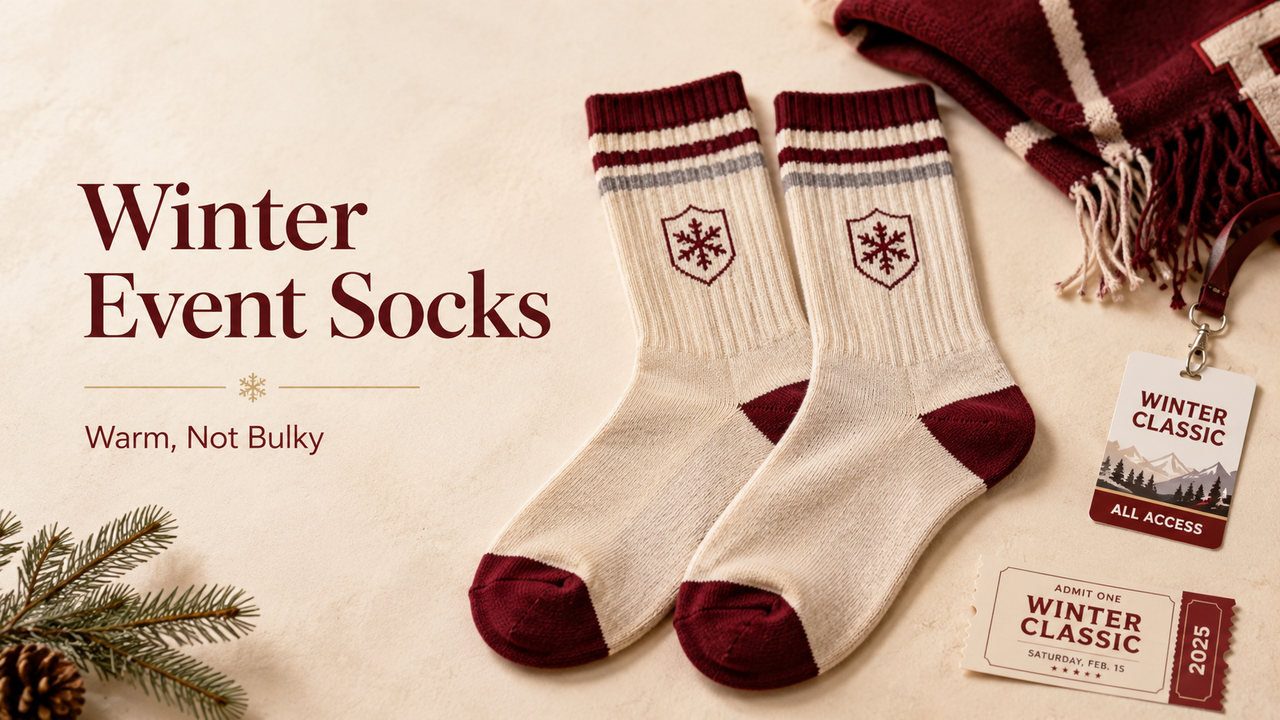
A midweight crew sock is often a safe choice for winter events because it offers more coverage and design space than ankle socks without becoming as specific as knee-high socks.
For event groups planning custom socks with logo orders, the sock height, material, and logo area should be decided together before the design is finalized.
Thickness Should Match Footwear
A winter sock may feel better with light cushioning, but full cushioning can make the sock too bulky. This matters when people wear sneakers, casual shoes, or work shoes during an event.
As a general reference, a midweight crew sock may be around 40–65g per pair. A heavier winter sock may move toward 70–100g per pair, especially with wool blends or extra cushioning.
If the sock is meant for everyday use after the event, midweight construction is usually easier to wear.
Wool Blends Add Warmth but Need Care
Wool blends can make winter socks feel warmer and more seasonal. Merino blends may be useful when the buyer wants warmth with better breathability. Alpaca blends may feel softer and warmer, but the buyer should confirm durability, care, and cost.
A practical guide to alpaca and merino wool socks can help buyers compare which material is better for warmth, softness, moisture handling, and daily wear.
Keep the Design Wearable
Winter event socks should not look like disposable promotional items. A clean logo, simple stripe, small pattern, or limited color palette often works better than a large design with too many details.
A logo around 1.5–3 inches tall on the calf area can work well for crew socks, depending on the design and sock size. Small text should be avoided if it needs to remain clear after stretch.
See also: How to Incorporate a Business in Ontario
Common Buying Mistakes
One mistake is choosing thick socks because they feel more valuable. If the socks are hard to wear with normal shoes, people may not use them.
Another mistake is using too many colors. Winter socks can look strong with two or three main colors and one clear logo area.
A third mistake is ignoring care instructions. Wool-blend socks may need clearer washing guidance than standard cotton or polyester socks.
Conclusion
Winter event socks should feel warm, useful, and easy to wear. The best choice is usually not the thickest sock, but the one that fits the event, footwear, climate, and audience.
A well-planned winter sock can keep the event visible after it ends because people are more likely to keep wearing it.