Ducted Evaporative Coolers: How to Achieve Efficient Cooling Across Large Industrial Spaces
Maintaining comfortable temperatures across large industrial spaces can be challenging, particularly when manufacturing equipment, machinery, production processes, and continuous operations generate significant heat. Conventional air conditioning systems may involve high installation costs, considerable energy consumption, and complex cooling requirements when applied to expansive facilities. Businesses therefore need cooling solutions that deliver consistent airflow, support ventilation, and operate efficiently across different working areas.
Ducted evaporative coolers offer a practical approach to industrial cooling by combining water-based evaporation technology with powerful air distribution systems. These systems draw fresh outdoor air, cool it through specially designed evaporative pads, and distribute it throughout a building using duct networks. They are particularly useful for facilities that require continuous fresh air and effective heat removal.
Understanding their working principles, components, applications, and installation requirements can help businesses select an appropriate cooling solution for their operational needs.
What Are Ducted Evaporative Coolers?
Ducted evaporative coolers are industrial cooling systems designed to distribute cooled outdoor air across multiple areas through an interconnected network of ducts. Unlike portable cooling units that provide airflow within a limited space, ducted systems deliver conditioned air to different sections of a building.
These systems use the natural process of water evaporation to reduce incoming air temperatures. They are particularly suitable for large facilities where ventilation, fresh air circulation, and operating efficiency are important considerations.
Understanding Industrial Ducted Cooling Systems
Industrial ducted cooling systems consist of a central cooling unit connected to strategically positioned air distribution ducts. The cooling unit draws outdoor air, passes it through wet evaporative pads, and uses powerful blowers to move the cooled air into designated areas.
Their capacity can be selected according to building dimensions, airflow requirements, heat generation, and operational conditions. This makes them suitable for facilities with different layouts and cooling demands.
How Ducted Evaporative Cooling Differs From Direct Cooling Units
Direct cooling units generally release cooled air into their immediate surroundings. Their effectiveness may become limited when the cooling requirement extends across several rooms or large working areas.
Ducted systems overcome this limitation by transporting cooled air through dedicated ductwork. They provide greater flexibility in air distribution and allow multiple workstations or production zones to receive fresh air from a central cooling arrangement.
Main Components of a Ducted Evaporative Cooler
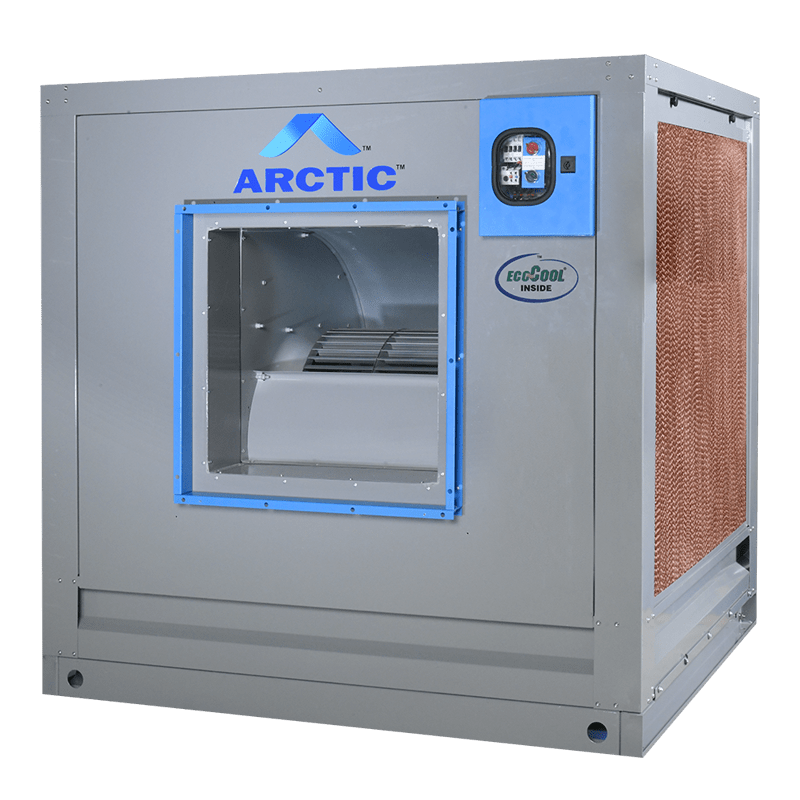
A typical system includes evaporative cooling pads, water circulation equipment, centrifugal blowers, electrical controls, and air distribution ducts. Each component contributes to the cooling process, from reducing incoming air temperatures to delivering sufficient airflow across the facility.
Why Ducted Systems Are Suitable for Large Spaces
Large industrial buildings often have high ceilings, extensive floor areas, and multiple heat-generating processes. Ducted systems help distribute air across these spaces without requiring individual cooling units for every section. Their scalable airflow capacities also make them suitable for different industrial applications.
How Does a Ducted Evaporative Cooling System Work?
Ducted evaporative cooling operates through a continuous process involving outdoor air intake, water evaporation, mechanical air movement, and ventilation. The system uses relatively simple cooling principles while providing controlled air distribution across large indoor environments.
Drawing Fresh Outdoor Air Into the Cooling Unit
The process begins when the cooling unit draws warm outdoor air through its intake section. Pre-filters may help capture dust and larger airborne particles before the air reaches the evaporative pads.
Using outdoor air also supports continuous ventilation rather than simply recirculating the same indoor air.
Cooling Air Through Specially Designed Evaporative Pads
The incoming air passes through continuously moistened cooling pads. As water evaporates from the pad surfaces, it absorbs heat from the passing air, reducing its dry-bulb temperature.
The cooling performance depends on outdoor temperature and relative humidity. Evaporative cooling generally performs best in hot and relatively dry conditions.
The Role of Centrifugal Blowers in Air Delivery
Centrifugal blowers generate the pressure required to move cooled air through duct networks. Their performance is important because ducts, bends, filters, and air outlets create resistance that the blower must overcome.
Appropriate blower selection helps maintain the required airflow throughout the facility.
Distributing Cooled Air Through Duct Networks
Once cooled, the air enters the distribution ducts and travels towards designated outlets. Properly positioned grilles and diffusers help distribute airflow across different work areas.
The duct layout must account for airflow requirements, building dimensions, and pressure losses to achieve consistent cooling.
Removing Warm and Stale Indoor Air Through Ventilation
Evaporative cooling systems require adequate exhaust openings to remove warm, humid, and stale indoor air. This allows fresh cooled air to enter continuously and prevents excessive moisture accumulation.
Without sufficient exhaust capacity, overall cooling performance may decline.
Key Benefits of Ducted Evaporative Coolers
Industrial facilities require cooling solutions that balance temperature management, ventilation, and operating expenses. Ducted evaporative systems offer several advantages when correctly designed and installed.
Cooling Multiple Work Areas Through One System
A central cooling arrangement can supply air to multiple sections through connected ducts. This reduces the need for separate cooling equipment across every working zone and supports a coordinated cooling strategy.
Energy-Efficient Operation for Large Facilities
Evaporative cooling uses water evaporation rather than conventional refrigeration cycles. Consequently, appropriately selected systems can consume substantially less electricity than conventional air conditioning, depending on operating conditions and system design.
Continuous Supply of Fresh and Cooled Air
These systems introduce outdoor air instead of relying entirely on recirculated indoor air. Continuous fresh air supply supports ventilation and helps remove accumulated heat, odours, and stale air.
Improved Air Distribution Across Industrial Floors
Duct networks allow cooled air to reach different sections of large buildings. Proper outlet positioning can improve airflow coverage and help reduce uneven temperature conditions.
Reduced Dependence on Conventional Refrigerant-Based Cooling
Evaporative cooling does not depend on the conventional refrigerant compression cycle. It offers an alternative for facilities where outdoor conditions and ventilation requirements make evaporative technology suitable.
Industrial and Commercial Applications of Ducted Evaporative Cooling
Ducted evaporative cooling systems are used across industries where large floor areas, continuous operations, and heat-producing activities create demanding ventilation requirements.
Manufacturing Plants and Factory Floors
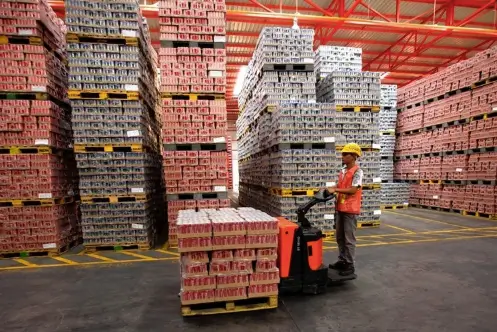
Manufacturing facilities often experience heat accumulation from machinery, production equipment, and industrial processes. Ducted systems help distribute cooled fresh air across production areas while supporting the removal of indoor heat.
Warehouses and Distribution Centres
Warehouses require adequate air movement across extensive storage and handling areas. Ducted cooling provides a centralised approach to distributing fresh air throughout large indoor spaces.
Printing, Packaging, and Processing Facilities
Printing and packaging operations may involve equipment that generates considerable heat. Evaporative cooling can help maintain more comfortable working conditions while providing continuous ventilation.
Workshops and Assembly Units
Workshops and assembly facilities benefit from targeted airflow across different operational sections. Ducted arrangements can direct cooled air towards occupied areas and workstations.
Commercial and Institutional Buildings
Certain large commercial and institutional buildings can also benefit from ducted evaporative cooling where natural ventilation, fresh air supply, and suitable outdoor humidity conditions support its operation.
Important Components of an Industrial Ducted Cooling System
The performance of an industrial cooling arrangement depends on the quality, compatibility, and correct functioning of its individual components.
High-Efficiency Evaporative Cooling Pads
Cooling pads provide the surface area required for water evaporation. Their thickness, material, and design influence cooling efficiency and airflow resistance. Regular cleaning helps maintain effective evaporation and prevents dirt accumulation.
Centrifugal Fans and Blowers
Centrifugal blowers provide the pressure needed to move air through industrial duct networks. Double-inlet, double-width fan arrangements are used in the ducted cooler range to support high-volume air delivery.
Water Distribution and Circulation Systems
Water pumps and distribution pipes maintain consistent moisture across the cooling pads. Proper circulation helps prevent dry sections and supports uniform evaporation.
Ductwork, Air Outlets, and Grilles
Ducts transport cooled air to different areas, while grilles and diffusers regulate its distribution. Their dimensions and positioning should match the required airflow and building layout.
Control Panels and Electrical Components
Electrical controls coordinate system operation, including blower and pump functions. Appropriate protection, wiring, and control arrangements contribute to safe and reliable performance.
How to Plan an Effective Ducted Evaporative Cooling System
Successful industrial cooling begins with a detailed assessment of the facility. Selecting equipment based only on floor area may result in insufficient airflow or unnecessary operating expenses.
Assessing the Total Area and Building Layout
Consider the building’s floor area, ceiling height, internal partitions, machinery placement, and occupancy. Identify areas with higher heat generation and determine whether different zones require separate airflow arrangements.
Calculating Required Airflow and CMH Capacity
Airflow is commonly measured in cubic metres per hour (CMH). The required capacity depends on building volume, ventilation targets, heat loads, and the intended number of air changes.
Equipment selection should consider the actual airflow delivered under the expected operating pressure rather than relying exclusively on nominal capacity.
Understanding Static Pressure and Duct Resistance
Static pressure represents the resistance the blower must overcome to move air through the distribution network. Long ducts, sharp bends, filters, and smaller outlets can increase resistance.
Blower selection should therefore consider both required airflow and external static pressure.
Planning Duct Routes and Air Outlet Locations
Duct routes should minimise unnecessary bends and restrictions. Air outlets must be positioned to provide effective coverage across occupied areas without creating excessive airflow in specific sections.
Providing Adequate Exhaust and Fresh Air Movement
Exhaust openings are essential for maintaining continuous air exchange. Their size and positioning should support the volume of incoming air while allowing accumulated heat and moisture to escape.
Ducted Evaporative Coolers vs. Conventional HVAC Systems
Both cooling technologies serve different requirements, and the appropriate choice depends on the building environment, climate, temperature expectations, and operating priorities.
Differences in Cooling Technology
Evaporative systems reduce air temperature through water evaporation, whereas conventional HVAC systems generally use refrigeration cycles. The former introduces cooled outdoor air, while many conventional systems rely substantially on indoor air recirculation.
Comparing Energy Consumption and Operating Costs
Ducted evaporative cooling can offer lower electricity consumption because it does not require the same refrigeration process as conventional air conditioning. However, water consumption, maintenance, climate conditions, and system sizing must also be considered.
Fresh Air Supply and Indoor Air Circulation
Evaporative systems continuously introduce fresh outdoor air and require adequate exhaust ventilation. Conventional HVAC systems can provide controlled temperature and humidity management, depending on their configuration.
Climate Conditions and Cooling Suitability
Evaporative cooling performs most effectively in hot, dry environments. Its cooling potential decreases as outdoor relative humidity increases. Conventional HVAC may be more appropriate where precise temperature and humidity control are essential.
Choosing the Right System for Your Facility
Consider the required indoor temperature, local climate, ventilation needs, energy budget, and building design before selecting a system. A professional assessment can help determine the most suitable technology and capacity.
Maintenance Tips for Ducted Evaporative Cooling Systems
Regular maintenance helps preserve airflow, cooling efficiency, and equipment reliability. A preventive maintenance programme should cover the complete cooling and distribution arrangement.
Inspecting and Cleaning Evaporative Cooling Pads
Check pads for mineral deposits, dirt, algae, and physical damage. Clean or replace them when necessary to maintain proper water absorption and airflow.
Maintaining Water Pumps and Distribution Lines
Inspect pumps, pipes, filters, and water distribution outlets for blockages or leaks. Proper water circulation is essential for consistent pad performance.
Checking Blowers, Motors, and Electrical Connections
Inspect blower assemblies, motor bearings, belts where fitted, and electrical connections. Unusual vibrations or noises should be investigated to prevent equipment damage.
Inspecting Ducts and Air Distribution Outlets
Check duct joints, insulation, grilles, and diffusers for dust accumulation, leakage, or obstruction. Maintaining clear airflow pathways supports effective cooling distribution.
Planning Preventive Maintenance Schedules
Schedule inspections before the cooling season and conduct periodic checks during operation. Documenting maintenance activities helps identify recurring issues and supports equipment longevity.
Frequently Asked Questions
1. How do ducted evaporative coolers work?
They draw warm outdoor air through wet evaporative pads, where water evaporation absorbs heat and reduces air temperature. Centrifugal blowers then distribute the cooled air through ducts into different indoor areas. Adequate exhaust ventilation allows warm and humid indoor air to escape.
2. Are ducted evaporative coolers suitable for large factories?
Yes. They are suitable for many large industrial facilities because they offer high airflow capacities and can distribute cooled fresh air across extensive floor areas. Their suitability depends on the factory’s heat load, layout, ventilation requirements, and outdoor humidity conditions.
3. How do I calculate the required capacity of a ducted cooler?
Start by assessing the building’s total volume, desired air changes, internal heat generation, and ventilation requirements. Calculate the required CMH airflow and consider external static pressure when selecting the blower and cooling unit. A professional cooling assessment can help establish the appropriate capacity.
4. Do ducted evaporative cooling systems require ventilation?
Yes. These systems need sufficient exhaust openings to remove warm, humid, and stale indoor air. Proper ventilation supports continuous fresh air movement and helps prevent excessive indoor humidity.
5. How much maintenance does a ducted evaporative cooler need?
Maintenance requirements depend on operating hours, water quality, environmental conditions, and equipment design. Regular pad cleaning, water system inspections, blower checks, electrical inspections, and duct maintenance help maintain reliable operation.
Conclusion
Efficient cooling across large industrial spaces requires more than simply installing high-capacity cooling equipment. Businesses must consider airflow requirements, building layouts, ventilation, heat generation, and operating conditions when selecting an appropriate solution.
Ducted evaporative coolers provide a practical option for facilities that require high-volume fresh air delivery, distributed cooling, and energy-conscious operation. Their effectiveness depends on suitable climate conditions, correctly calculated airflow, properly designed ductwork, adequate exhaust ventilation, and regular maintenance.
ARCTIC offers a range of industrial ducted evaporative cooling solutions, with standard models ranging from 8,000 CMH to 120,000 CMH. Features include heavy-duty metal construction, three-sided cooling pad designs, centrifugal blowers, and integrated control panels.
Businesses planning an industrial cooling installation can explore the available product specifications and consult the technical team to identify suitable equipment. For assistance with system selection and cooling requirements, visit the contact page and discuss the requirements of your facility.