Polished Concrete Floors Gold Coast: How to Choose the Right Finish for Your Property
Choosing the right flooring involves more than selecting a colour or surface texture. The floor must complement the property’s design, withstand everyday use, and remain practical to clean and maintain. Polished concrete is a popular option because it combines a contemporary appearance with the strength of an existing concrete slab. However, the final result depends on several decisions, including the polishing method, stone exposure, gloss level, and condition of the concrete.
If you are considering polished concrete floors Gold Coast, understanding the available finishes can help you make a more informed choice. This guide explains the different concrete flooring options, where they work best, what affects their quality, and how to maintain the finished surface.
Why Are Polished Concrete Floors Popular on the Gold Coast?
Concrete flooring suits many modern interiors because it offers a clean, understated appearance without relying on separate floor coverings. Its performance and appearance can also be tailored to the requirements of a particular property.
Combining Modern Design With Practical Flooring
Polished concrete creates a smooth, refined surface that complements contemporary, minimalist, and industrial-inspired interiors. Depending on the selected exposure and sheen, the floor can have a subtle natural appearance or a more reflective finish.
Another advantage is that the concrete slab becomes the visible flooring surface. This avoids the need for an additional decorative floor layer and creates a consistent look across suitable areas.
Long-Term Durability for Busy Indoor Spaces
Mechanically polished concrete is designed to withstand regular foot traffic and everyday use. The process involves grinding and refining the concrete, applying a suitable densifier, and polishing the surface to the specified finish.
When the slab is suitable and the work is completed correctly, the result can provide long-term performance. Its resistance to everyday wear makes it worth considering for residential and commercial interiors.
Easy Cleaning and Everyday Maintenance
A properly finished polished concrete floor is relatively straightforward to maintain. Routine dust removal and occasional mopping with an appropriate pH-neutral cleaner help manage dirt and surface marks.
Unlike some flooring systems, mechanically polished concrete does not rely on a decorative top coating that can peel away. However, correct cleaning practices remain important for preserving its appearance.
Versatility Across Residential and Commercial Properties
Concrete finishes can be selected to suit different interior requirements. A residential space may benefit from a softer sheen, while a retail or showroom environment may call for a more distinctive finish.
The right specification depends on traffic levels, lighting, cleaning routines, and the visual effect required.
Understanding the Different Types of Concrete Floor Finishes
Not every concrete finish is produced using the same method. Understanding the differences between mechanical polishing, honing, and burnishing helps prevent confusion when comparing flooring quotes.
Mechanically Polished Concrete Explained
Mechanically polished concrete is produced by grinding the slab with progressively finer diamond tooling. The process removes surface imperfections, exposes the selected amount of aggregate, and refines the concrete to the required gloss level.
A densifier is applied during the process to help harden the surface. The final appearance can range from minimal stone exposure to a more pronounced aggregate finish.
Honed Concrete and Its Low-Sheen Appearance
Honed concrete has a smooth, refined surface with a matte or low-sheen appearance. It is generally sealed to protect the concrete while retaining a more natural look.
This finish is suitable for properties where a subtle appearance is preferred over strong light reflection. The final sheen and protective system should be selected according to the intended use of the floor.
Burnished Concrete and Its Smooth Industrial Finish
Burnished concrete creates a smooth, refined appearance without exposing the stone aggregate in the same way as mechanically polished concrete. It can provide a clean industrial-style finish, although the result depends on the slab and the method used.
It is important to confirm the proposed process with the contractor because burnished and mechanically polished concrete are different flooring systems.
Comparing Polished, Honed, and Burnished Concrete
The main differences relate to the preparation method, aggregate visibility, surface protection, and final appearance.
Mechanically polished concrete offers adjustable stone exposure and gloss. Honed concrete provides a smooth, generally lower-sheen surface with a sealer. Burnished concrete delivers a refined look with little or no visible aggregate exposure.
The most suitable option depends on the property’s design and practical requirements rather than appearance alone.
How to Choose the Right Stone Exposure and Gloss Level
Stone exposure and gloss level are two important decisions when specifying mechanically polished concrete. They determine much of the floor’s final character, so both should be discussed before work begins.
Salt-and-Pepper Aggregate Exposure
Salt-and-pepper exposure reveals fine to medium-sized stones scattered across the concrete surface. It creates a lightly textured visual pattern without exposing the full depth of the aggregate.
This finish offers a balanced appearance and can be a cost-effective alternative to deeper grinding for full stone exposure, depending on the slab.
Medium Stone Exposure
Medium exposure provides a more noticeable view of the aggregate while retaining a balanced concrete background. It can add visual detail without making the stone pattern dominate the entire floor.
The precise result depends on the concrete mix, aggregate distribution, and grinding depth.
Full Aggregate Exposure
Full aggregate exposure involves deeper grinding to reveal more of the stone profile. It creates a prominent decorative appearance and is generally best planned when a new slab is being designed and poured specifically for polishing.
Existing slabs may not have consistent aggregate distribution, so a contractor should assess their suitability before this finish is specified.
Selecting Satin, Medium, or High-Gloss Finishes
Gloss level determines how much light the floor reflects. A matte finish has minimal shine, satin provides moderate reflection, and high gloss creates a more reflective surface.
The choice should account for the property’s lighting, interior style, cleaning requirements, and expected use. A higher gloss is not automatically the best option for every space.
Matching the Finish to Your Interior Design
Consider the floor alongside wall colours, furniture, lighting, and other fixed finishes. A subtle sheen can complement understated interiors, while a stronger reflection may suit spaces designed around a more prominent floor surface.
It is also useful to review finish samples or completed project images before confirming the specification.
Where Do Polished Concrete Floors Work Best on the Gold Coast?
Polished concrete can suit several types of indoor environments when the finish is selected according to the property’s function. Its combination of durability and straightforward maintenance makes it particularly relevant to areas with regular movement.
Residential Living Areas and Hallways
Living rooms, entryways, and hallways can benefit from the clean appearance of concrete flooring. The continuous surface can help create visual consistency between connected indoor spaces.
The finish should be selected with household activity, lighting, and slip considerations in mind.
Retail Stores and Shopping Spaces
Retail floors need to accommodate frequent foot traffic, regular cleaning, and changing displays. Mechanically polished concrete offers a hard-wearing surface that can maintain a professional appearance when properly specified and maintained.
Commercial Offices and Reception Areas
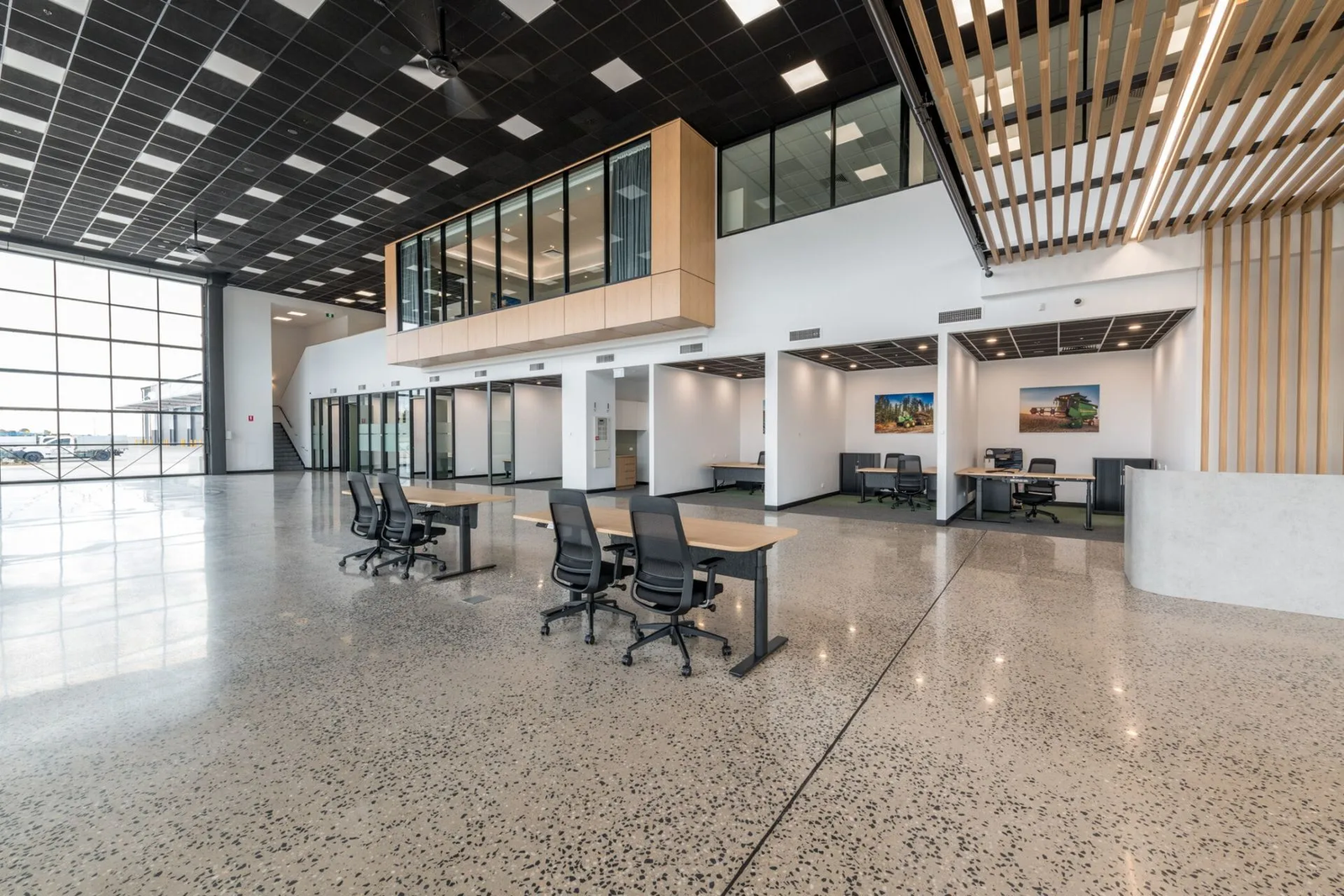
Offices, reception areas, corridors, and shared spaces often require flooring that looks presentable while handling everyday use. A consistent concrete finish can complement modern commercial interiors.
Showrooms and Hospitality Interiors
Showrooms benefit from flooring that provides a clean backdrop for displayed products. Hospitality interiors may also use concrete finishes where durability and ease of cleaning are important, although wet areas require careful consideration of slip resistance.
Large Commercial and Industrial Buildings
Large facilities may require flooring that can withstand substantial movement and operational demands. The slab condition, expected loads, traffic patterns, and maintenance arrangements should all be assessed before selecting a finish.
What Determines the Quality of a Polished Concrete Floor?
A good result depends on more than the final polishing stage. Preparation, materials, process control, and clear project specifications all influence the finished floor.
Existing Slab Quality and Concrete Composition
The concrete slab affects the appearance that can be achieved. Its age, strength, aggregate distribution, previous repairs, cracks, and surface condition may influence the final result.
An inspection helps establish realistic expectations before work begins.
Proper Surface Preparation and Grinding
Grinding prepares the surface and removes unwanted imperfections. The contractor must use suitable equipment and progressively refine the concrete to achieve the specified exposure and smoothness.
Inadequate preparation can affect the consistency and appearance of the finished floor.
Correct Densifier Application
A concrete densifier helps strengthen the surface by reacting with compounds in the concrete. Correct product selection and application are important parts of the mechanical polishing process.
Consistent Polishing and Finishing Techniques
The polishing stages must be completed carefully to achieve an even finish. Consistency matters across the entire floor, particularly where the project includes large connected areas.
Professional Quality Control and Handover
Final checks should confirm that the agreed finish has been achieved and that the work area is ready for use. Handover guidance should explain suitable cleaning methods and ongoing care.
Is Polished Concrete a Suitable Choice for Your Property?
Before choosing polished concrete, assess how the floor will be used and what performance is expected from it.
Evaluating Foot Traffic and Daily Usage
Consider the number of people using the space, the movement of equipment, and the likelihood of spills or surface abrasion. These factors help determine the appropriate flooring system and finish.
Considering Indoor Lighting and Surface Appearance
Natural and artificial lighting can change how a concrete floor looks throughout the day. Reflective finishes may make a space feel brighter, but they can also highlight surface marks and imperfections.
Understanding Slip Resistance and Wet Conditions
Polished concrete can become slippery when wet, particularly with higher-gloss finishes. Entry points, wet zones, cleaning routines, and expected footwear should be considered during specification. Ask the contractor about suitable finish options and relevant slip considerations.
Comparing Initial Investment and Long-Term Maintenance
The project cost depends on the floor area, slab condition, preparation requirements, selected exposure, and finish. Although the initial investment may be higher than some basic flooring options, the durability and relatively simple maintenance of polished concrete can make it worth considering over the longer term.
How to Care for Polished Concrete Floors
Routine maintenance helps preserve the appearance and performance of a polished concrete surface. The appropriate cleaning method depends on the finish and the products recommended by the contractor.
Recommended Daily and Weekly Cleaning
Remove loose dirt and grit through regular sweeping or dust mopping. Mop periodically using clean water and a suitable pH-neutral cleaner. Promptly remove spills to prevent residue from building up.
Preventing Surface Scratches and Abrasion
Use suitable protective pads beneath furniture and avoid dragging heavy objects across the floor. Entry mats can also help reduce the amount of abrasive dirt brought inside.
Choosing Appropriate Cleaning Solutions
Avoid harsh chemicals, acidic products, and abrasive cleaning tools unless the flooring contractor confirms they are suitable. Incorrect cleaning products can affect the surface appearance.
Recognising When Professional Maintenance Is Needed
If the floor develops persistent marks, uneven appearance, or areas that are difficult to clean, seek professional advice. The contractor can assess whether specialist cleaning or maintenance is appropriate.
Finding the Right Concrete Polishing Contractor on the Gold Coast
Choosing an experienced contractor is essential because the quality of the finished floor depends heavily on preparation and workmanship. Allure Concrete Solutions lists mechanically polished concrete, honed concrete, and burnished concrete among its flooring solutions, with service coverage that includes the Gold Coast.
Checking Experience Across Different Flooring Systems
Look for a contractor familiar with the finish you require. Experience with mechanical polishing, honing, and burnishing helps ensure the proposed method matches the property’s needs.
Reviewing Previous Projects and Finish Quality
Review project photographs and available portfolio information to understand the contractor’s workmanship. Pay attention to aggregate exposure, consistency, surface refinement, and overall presentation.
Confirming Licensing, Insurance, and Industry Credentials
Ask for relevant licensing and insurance details before appointing a contractor. Check that the credentials apply to the work being undertaken and that the contractor can explain the products and systems being used.
Understanding Project Scheduling and Site Preparation
Discuss access, equipment requirements, preparation, and the expected project sequence. Commercial sites may also need work staged around other trades or operating hours.
Requesting a Detailed Scope of Work and Quote
A written quote should explain the proposed flooring system, preparation requirements, stone exposure, gloss level, and any additional work. It should also clarify scheduling, handover expectations, and aftercare guidance.
Frequently Asked Questions
Are polished concrete floors suitable for Gold Coast homes?
Yes. Polished concrete can suit residential interiors where a durable, contemporary, and relatively low-maintenance surface is preferred. The slab condition, selected finish, and household requirements should be assessed before installation.
What is the difference between polished and honed concrete?
Mechanically polished concrete is ground and refined using diamond tooling, with a densifier applied during the process. Honed concrete is also ground to create a smooth surface but is generally sealed with a lower-sheen finish.
Can polished concrete be installed on an existing slab?
Often, yes. However, the slab must be assessed for cracks, coatings, repairs, aggregate distribution, and general condition. These factors determine which finish is achievable.
Does polished concrete require regular resealing?
Mechanically polished concrete does not generally require periodic resealing in the same way as sealed flooring systems. However, maintenance requirements depend on the specified system and site conditions. Follow the contractor’s aftercare recommendations.
How long does a concrete polishing project take?
The timeframe depends on the floor area, slab condition, preparation requirements, selected finish, and site access. A contractor can provide a more accurate schedule after assessing the property and confirming the scope.
Conclusion
Polished concrete offers a durable and versatile flooring option for residential and commercial properties on the Gold Coast. Choosing the right result involves understanding the differences between mechanical polishing, honing, and burnishing, as well as selecting suitable stone exposure and gloss levels. Slab condition, preparation, densification, and consistent workmanship are equally important.
Before committing to a flooring system, consider how the space will be used, the appearance you want, and the maintenance involved. Review the proposed scope carefully and discuss any concerns about wet conditions, surface finish, or project scheduling. To discuss your flooring requirements and request further information, contact the team.