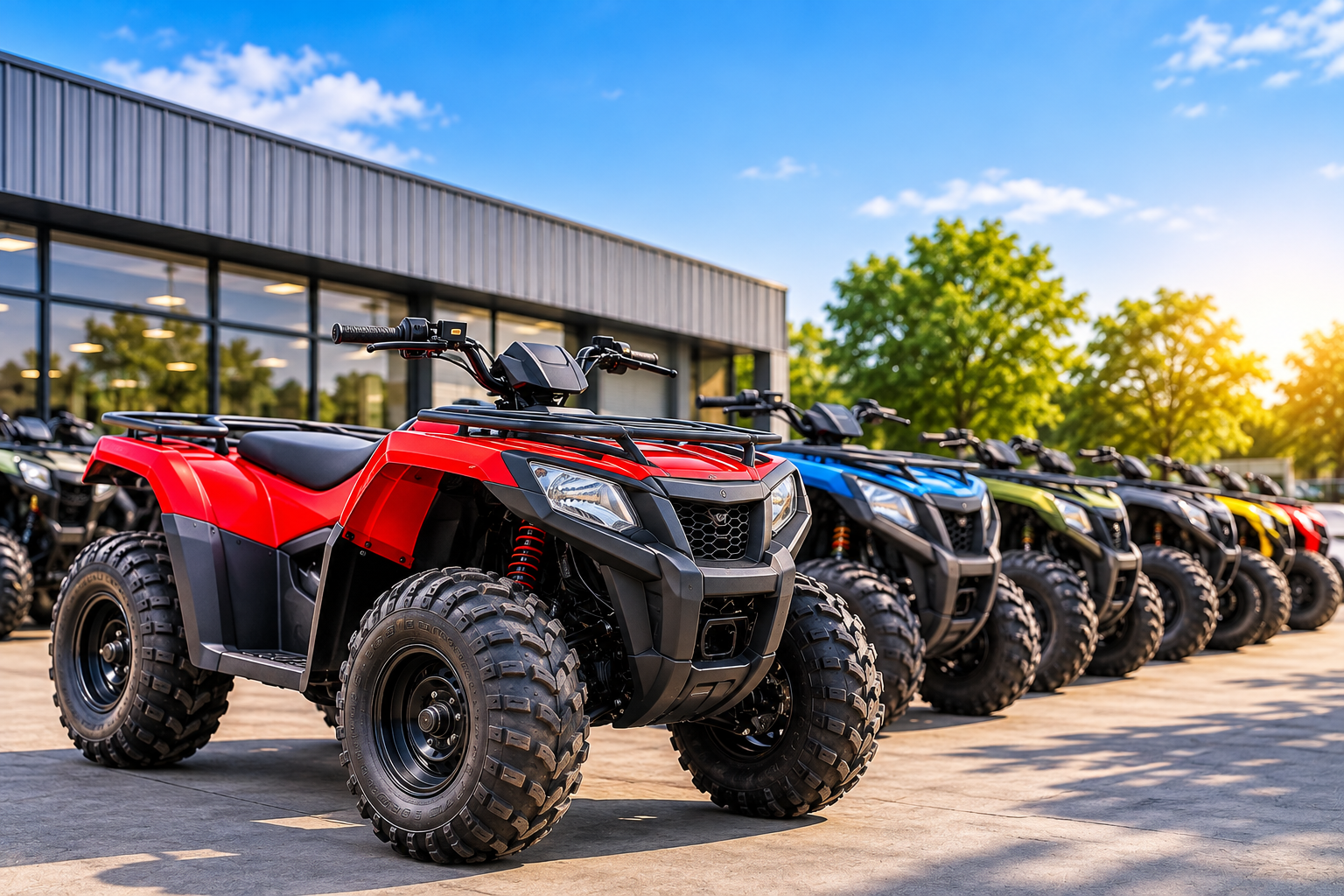
What to Consider When Choosing a Reliable Wholesale ATV Distributor
The powersports industry offers business opportunities for retailers, vehicle sellers, and businesses interested in supplying all terrain vehicles to customers. As demand for recreational vehicles and outdoor riding products continues to create interest among buyers, having access to a dependable supply network becomes increasingly important.
For businesses selling ATVs, choosing the right supplier can influence product availability, pricing, inventory planning, and customer satisfaction. A reliable supply partner should offer clear product information, consistent communication, suitable vehicle options, and transparent business terms.
However, selecting a supplier involves more than comparing wholesale prices. Businesses also need to consider product quality, ordering requirements, delivery arrangements, warranty support, and the availability of replacement parts.
Working with a suitable Wholesale ATV distributor can help retailers manage their inventory more effectively and develop a dependable product supply strategy. Whether you are starting a new powersports business or expanding an existing operation, understanding what to look for in a distributor can help you make a more informed decision.
In this guide, we will explore the key factors businesses should evaluate before choosing an ATV distribution partner.
1. Understand Your Business Requirements
Before approaching potential distributors, take time to understand your business needs. Every retailer operates differently, and the right supplier should be able to support your specific requirements.
For example, a small dealership may prefer flexible ordering quantities, while a larger retailer may need regular inventory replenishment and a wider product selection.
Start by considering the following questions:
- What types of ATVs do your customers usually purchase?
- Are you targeting recreational riders, utility users, or first time buyers?
- How many vehicles do you expect to order?
- Do you need regular inventory replenishment?
- What is your expected purchasing budget?
- Do you require accessories and replacement components?
- What delivery arrangements would work for your business?
Having clear answers will help you identify suppliers that align with your operational needs.
2. Evaluate the Distributor’s Product Range
Product variety is an important consideration when selecting a distribution partner. Retailers often serve customers with different preferences, experience levels, and budgets.
A supplier with a suitable range of products can make it easier to serve different customer requirements.
Depending on the distributor’s catalogue, available categories may include:
Recreational ATVs
These vehicles are generally intended for leisure riding and outdoor exploration. Customers may evaluate their design, engine specifications, comfort, and handling characteristics.
Utility ATVs
Utility models are designed for practical activities and may include features such as storage racks or towing capabilities, depending on the model.
Sport ATVs
Sport oriented models are generally developed for recreational riding that involves responsive handling and performance focused features.
Youth ATVs
Some product ranges include smaller vehicles designed for younger riders. These products must be selected according to manufacturer age recommendations and applicable safety requirements.
A broad catalogue can give retailers more opportunities to match products with customer needs. However, product variety should always be supported by clear specifications and accurate availability information.
3. Check Product Quality and Manufacturing Standards
Product quality should be one of the highest priorities when selecting a wholesale supplier. Retailers depend on the products they sell to meet customer expectations and comply with applicable safety requirements.
Before placing a large order, request detailed product information and examine the available documentation.
Important areas to review include:
- Frame construction.
- Engine specifications.
- Suspension design.
- Brake system.
- Tyre quality.
- Steering components.
- Electrical systems.
- Vehicle finishing and assembly.
- Manufacturer compliance information.
Ask whether the distributor can provide product manuals, technical specifications, and relevant certification documents.
If possible, inspect a sample vehicle before committing to a larger order. This allows you to evaluate the construction and presentation of the product more closely.
It is also important to understand the manufacturer’s quality control processes rather than relying only on marketing descriptions.
4. Compare Wholesale Pricing and Order Requirements
Pricing directly influences the profitability of a retail business. However, the lowest quoted price does not always represent the best overall value.
When comparing suppliers, review the complete pricing structure and understand what is included.
Consider asking about:
- Wholesale unit pricing.
- Minimum order quantities.
- Bulk purchasing terms.
- Payment schedules.
- Shipping and handling charges.
- Applicable taxes and duties.
- Discounts for repeat orders.
- Additional charges for special requirements.
A transparent pricing structure helps businesses calculate their purchasing costs more accurately.
You should also check whether the distributor provides written quotations. Having pricing details documented can reduce confusion when placing orders or planning future purchases.
5. Understand Minimum Order Quantities
Minimum order quantities can influence how retailers manage their budgets and inventory.
Some distributors may require businesses to purchase a specific number of vehicles per order. Others may offer more flexible arrangements depending on product availability and business relationships.
Before entering into an agreement, clarify:
- What is the minimum quantity for a first order?
- Do different ATV models have different order requirements?
- Can multiple models be combined in one order?
- Are smaller trial orders available?
- Do order quantities affect pricing?
- What happens if a product becomes unavailable after an order is confirmed?
Understanding these details can help you avoid purchasing more inventory than your business can reasonably manage.
For new retailers, starting with a carefully planned quantity may be more practical than committing to a large purchase immediately.
6. Review Inventory Availability and Supply Consistency
Product availability is important for businesses that want to fulfil customer orders without unnecessary delays.
A supplier may offer attractive prices and a wide catalogue, but inconsistent stock availability can make inventory planning difficult.
Ask potential distributors how they manage inventory and communicate stock updates.
Useful questions include:
- Which models are currently available?
- How frequently is inventory replenished?
- Can stock availability be confirmed before payment?
- Are popular models likely to remain available?
- How are backorders handled?
- Will the distributor inform you about discontinued products?
Reliable communication about stock levels can help retailers avoid promising customers products that are unavailable.
It is also useful to discuss expected restocking timelines so that you can plan upcoming orders more effectively.
7. Consider Shipping and Delivery Arrangements
Delivery arrangements can affect both business costs and customer satisfaction. ATVs are larger products that may require specialized handling and transportation.
Before selecting a supplier, understand how vehicles are prepared, packaged, transported, and delivered.
Discuss the following details:
- Available delivery locations.
- Estimated dispatch timelines.
- Shipping costs.
- Packaging and handling procedures.
- Responsibility for transportation damage.
- Delivery documentation.
- Order tracking arrangements.
You should also clarify whether vehicles arrive fully assembled or require additional preparation before sale.
If assembly or inspection is necessary, understand which responsibilities belong to the distributor and which belong to the retailer.
Clear delivery terms help prevent misunderstandings and make inventory planning more predictable.
8. Check Warranty and After Sales Support
A wholesale supplier relationship should not end once products are delivered. Retailers may need assistance with technical questions, warranty claims, replacement components, or product documentation.
Before choosing a supplier, ask how after sales support is handled.
Important points include:
- Warranty duration and coverage.
- Warranty registration procedures.
- Claim submission requirements.
- Availability of replacement parts.
- Technical assistance.
- Procedures for handling damaged products.
- Support for product related customer enquiries.
Make sure warranty responsibilities are clearly explained in writing.
It is also important to understand whether warranty claims are managed directly by the manufacturer, the distributor, or an authorized service network.
Having a clear support process can help retailers respond to customer concerns more effectively.
9. Evaluate Spare Parts Availability
Spare parts availability can influence the long term ownership experience of an ATV. Customers may require replacement components or routine service items as their vehicles are used.
Retailers should therefore consider whether a distributor can provide access to commonly required parts.
Examples include:
- Air filters.
- Brake components.
- Batteries.
- Tyres and tubes.
- Drive belts or chains, depending on the model.
- Filters and maintenance items.
- Electrical components.
- Replacement body panels.
Ask about parts ordering procedures, availability, and expected delivery times.
A supplier that provides clear information about replacement components can help businesses plan their service support and respond to customer requirements.
10. Assess Communication and Business Transparency
Communication plays a major role in building a successful supplier relationship.
A distributor should provide clear answers about products, prices, stock availability, delivery arrangements, and business terms.
Before placing an order, observe how the supplier handles your questions.
Look for these qualities:
- Clear product descriptions.
- Prompt responses to business enquiries.
- Accurate stock information.
- Written quotations and agreements.
- Transparent payment conditions.
- Clear order confirmation procedures.
- Regular updates about delays or changes.
A professional approach to communication can make routine purchasing activities more manageable.
Avoid entering into an agreement if important details remain unclear or if the supplier is unwilling to provide relevant documentation.
11. Verify Business Credentials and Supplier Background
Before establishing a wholesale relationship, carry out basic checks to understand the supplier’s business background.
This is particularly important when ordering vehicles in large quantities or making advance payments.
Consider verifying:
- Business registration details.
- Physical business address.
- Contact information.
- Manufacturer or distribution authorization, where applicable.
- Relevant product documentation.
- References from existing business customers.
- Written wholesale terms.
You can also request information about the supplier’s experience in the powersports industry.
Do not rely entirely on promotional material or verbal assurances. Independent verification and written documentation can help reduce purchasing risks.
12. Understand Payment Terms and Business Agreements
Payment conditions should be discussed before confirming an order. Different distributors may have different requirements based on order size, customer history, and business arrangements.
Clarify the following:
- Accepted payment methods.
- Advance payment requirements.
- Payment deadlines.
- Credit arrangements, if offered.
- Refund and cancellation conditions.
- Procedures for resolving billing discrepancies.
- Documentation provided after payment.
Read the wholesale agreement carefully before signing.
Pay particular attention to delivery responsibilities, warranty obligations, return conditions, and any restrictions on product resale.
A clear agreement protects both parties by establishing expectations from the beginning.
13. Build a Long Term Distribution Relationship
A good supplier relationship can support business growth over time. Retailers that maintain clear communication and consistent purchasing practices may find it easier to coordinate inventory and plan future orders.
To develop a productive relationship:
- Share realistic purchasing forecasts.
- Communicate upcoming inventory requirements.
- Pay invoices according to agreed terms.
- Report product concerns promptly.
- Maintain accurate order records.
- Discuss changing customer demand.
- Review supplier performance regularly.
It is also helpful to evaluate whether the distributor can support your business as it expands.
A supplier that meets your current requirements but cannot support future inventory needs may not be the right long term choice.
14. Common Mistakes to Avoid When Selecting a Distributor
Choosing a wholesale supplier without sufficient research can create operational and financial challenges.
Avoid these common mistakes:
Selecting a supplier based only on price
Low pricing is attractive, but product quality, warranty support, and delivery reliability are equally important.
Ignoring written agreements
Verbal discussions may not provide enough clarity about payment, delivery, and warranty responsibilities.
Ordering too much inventory
Large orders can create cash flow challenges if products do not sell as expected.
Failing to check spare parts availability
Limited access to replacement components may affect customer support after a sale.
Overlooking product documentation
Accurate specifications and compliance information are important when selling vehicles.
Not verifying supplier credentials
Basic business checks can help you understand whether a supplier is suitable for a long term relationship.
Taking time to evaluate these areas can help retailers make more confident purchasing decisions.
Frequently Asked Questions (FAQs)
1. What does a wholesale ATV distributor do?
A wholesale distributor supplies ATVs to retailers, dealerships, and other eligible businesses. Depending on the business arrangement, the distributor may also provide product information, inventory updates, replacement parts, and warranty support.
2. How do I choose a reliable ATV distributor?
Evaluate product quality, pricing, stock availability, delivery arrangements, warranty terms, spare parts access, communication, and business credentials before entering into an agreement.
3. What should retailers check before placing a bulk ATV order?
Retailers should review unit pricing, minimum order quantities, product specifications, inventory availability, shipping costs, payment terms, and warranty conditions.
4. Why is spare parts availability important?
Replacement parts support routine maintenance and repairs. Access to commonly required components can help retailers respond to customer needs and support long term product ownership.
5. Are minimum order quantities common in wholesale ATV purchasing?
Some distributors require minimum order quantities, while others may offer more flexible purchasing arrangements. Businesses should confirm these requirements before placing an order.
6. What documents should I request from an ATV distributor?
Depending on the business arrangement, you may need product specifications, manufacturer documentation, warranty information, invoices, compliance documents, and written wholesale terms.
7. How can retailers evaluate wholesale ATV pricing?
Compare the complete cost, including unit price, shipping, taxes, handling, payment conditions, and any additional charges. Consider product quality and support alongside the quoted price.
8. Why is after sales support important when selecting a distributor?
After sales support helps retailers manage warranty enquiries, technical questions, replacement parts, and product concerns. Clear support arrangements can contribute to a better customer experience.
Conclusion
Selecting a suitable wholesale supplier is an important decision for any business involved in ATV sales. Product quality, pricing, stock availability, delivery arrangements, warranty coverage, and spare parts access all influence how effectively a retailer can manage its operations.
A dependable distribution relationship should provide more than access to vehicles. It should also offer clear communication, transparent business terms, and the information needed to make purchasing and inventory decisions.
Before choosing a Wholesale ATV distributor, take time to compare available options, verify business credentials, review product documentation, and understand the complete terms of the agreement. A well researched decision can help create a stronger supply network and support the long term growth of your powersports business.